RiverRock Water Gardens
A stone waterfall and rockery planted with hydrangeas, against a dark fence

Areas We Cover · Cambridgeshire

Pond Installer In Cambridge

Ponds, waterfalls and water features for Cambridge gardens, from narrow terrace plots near the centre to larger gardens in the villages around the city.

Gardens Across Cambridge

A Pond For Every Cambridge Garden.

Cambridge gardens come in every shape. A Victorian terrace near Mill Road might have a long, narrow plot with no side access, a house in Newnham can have a garden ringed by mature trees, and a new home in Trumpington or Eddington often starts with bare, compacted ground. Each of those calls for a different kind of pond, and the garden is always where we start.

We are based at Willingham, a short drive north of the city, and we design and build ponds, waterfalls and water features across Cambridge and the villages around it. You deal with the same small team from the first visit to the finished pond, and the site visit and the written quotation are both free.

Gardens Across The City

Which Garden Is Yours?

Cambridge gardens fall into a few familiar types. Choose the one closest to yours to see the kind of pond that usually suits it.

HouseTypical PlotNot To Scale

Victorian Terrace

Typical In

Romsey, Petersfield and the De Freville area

A long, narrow garden suits a compact wildlife pond, a formal pool near the house or a self contained water feature. Materials come through the house, so we plan the route and protect floors and doorways.

A guide only. Every pond is designed for its own garden.

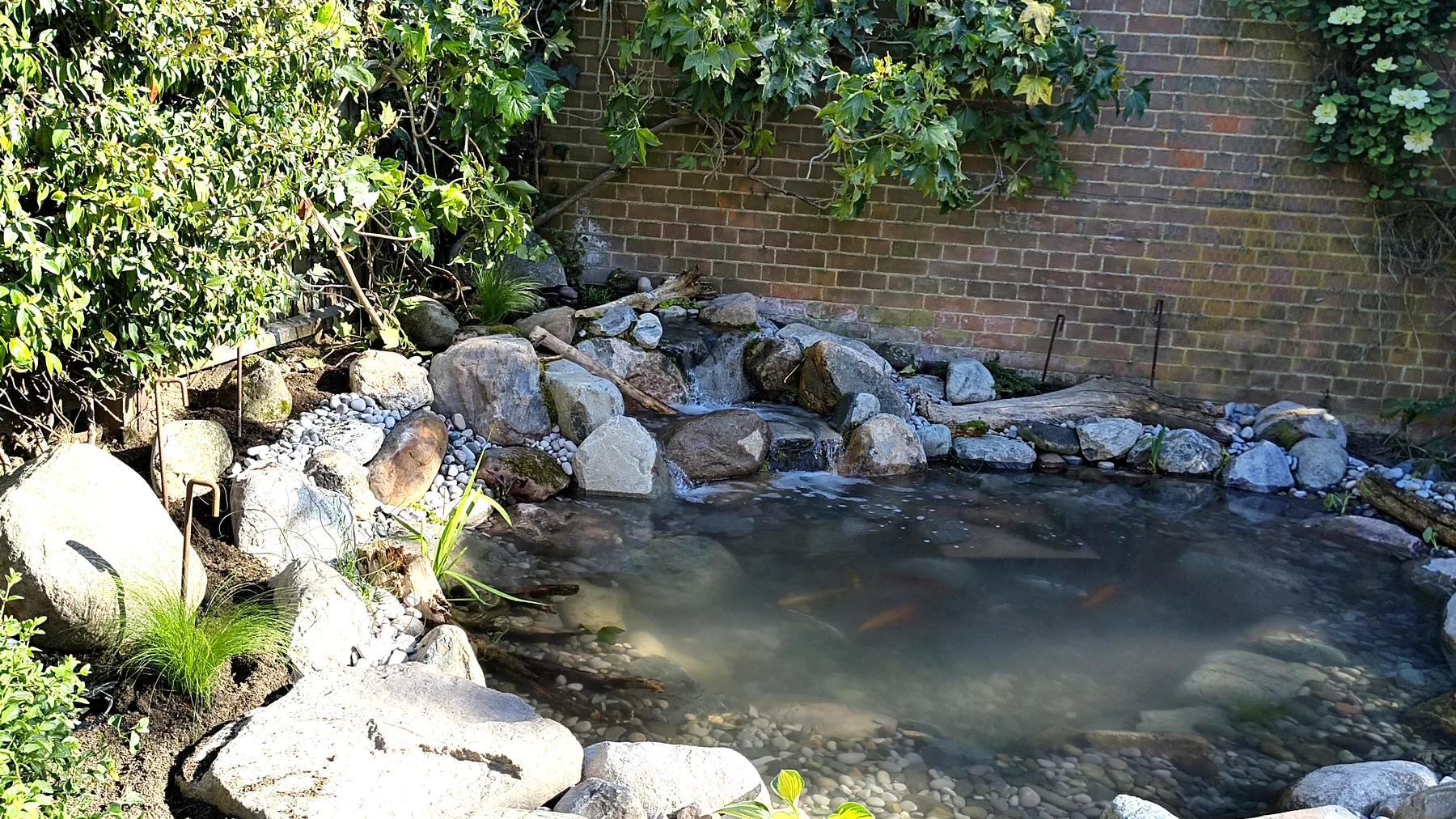
The finished pond built against an old brick wall

Cambridge Homes And The Gardens Behind Them
Large parts of the city, such as Romsey, Petersfield and the De Freville area of Chesterton, are Victorian and Edwardian terraces and semis. Their gardens tend to be long and narrow, bounded by old brick walls and shaded for part of the day by neighbouring houses and trees. A pond here has to work hard in a small space, so we often suggest a compact wildlife pond, a formal pool close to the house, or a self contained water feature where space is very tight.

Newnham and west Cambridge are known for larger late Victorian and Edwardian houses, many of them built once college fellows were allowed to marry, and their gardens are bigger and older. Mature trees bring shade and a heavy fall of leaves every autumn, so we position ponds carefully, plan for easy leaf clearance and choose planting that copes with partial shade.

On the edges of the city, newer neighbourhoods such as Trumpington Meadows, Great Kneighton and Eddington have modern homes with smaller, newly made gardens. The ground there has often been compacted during building work, and a pond can become the centrepiece of an otherwise bare plot. Interwar and postwar homes in areas such as Cherry Hinton and Arbury sit in between, with medium sized gardens that suit most kinds of pond.

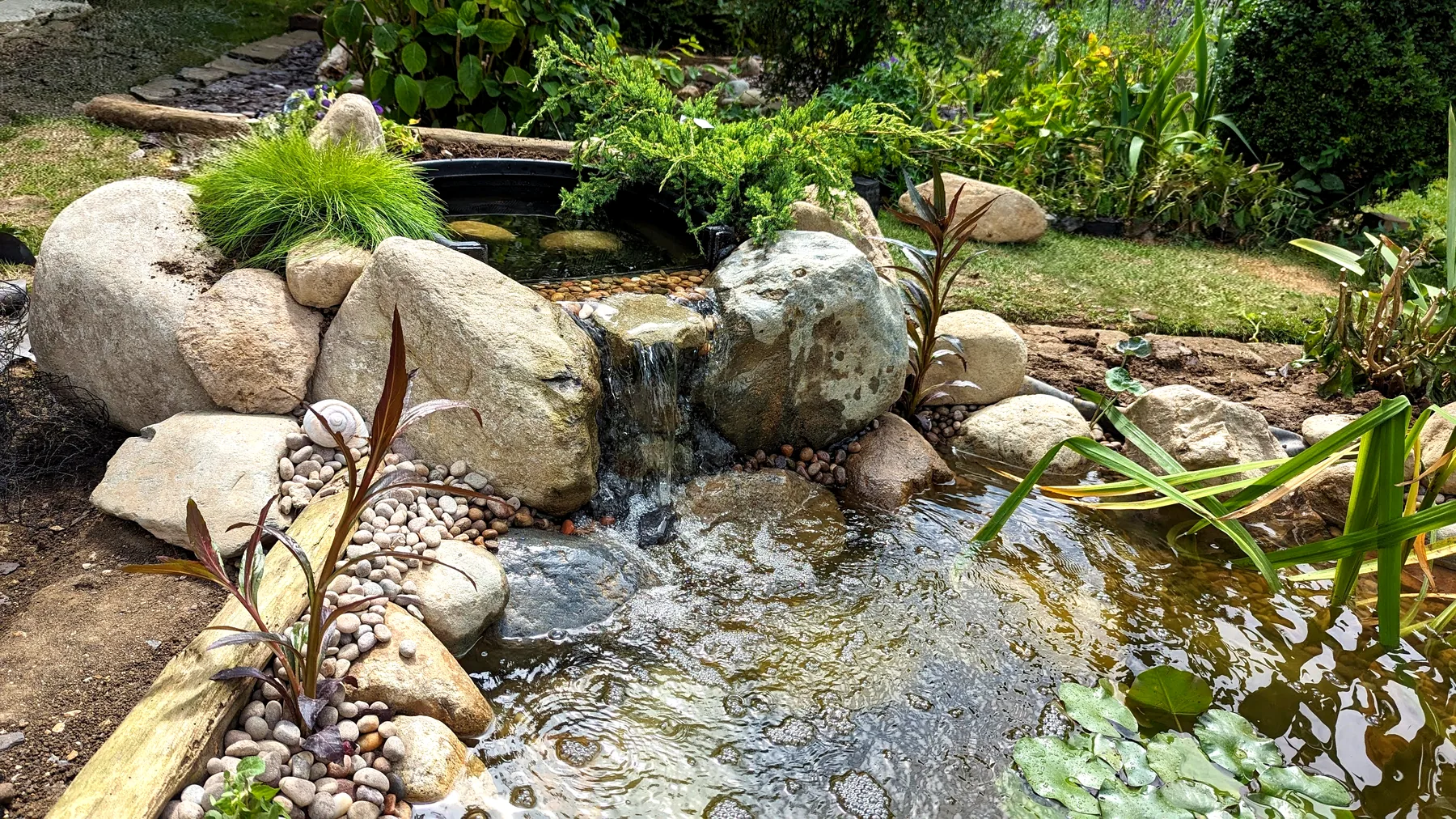
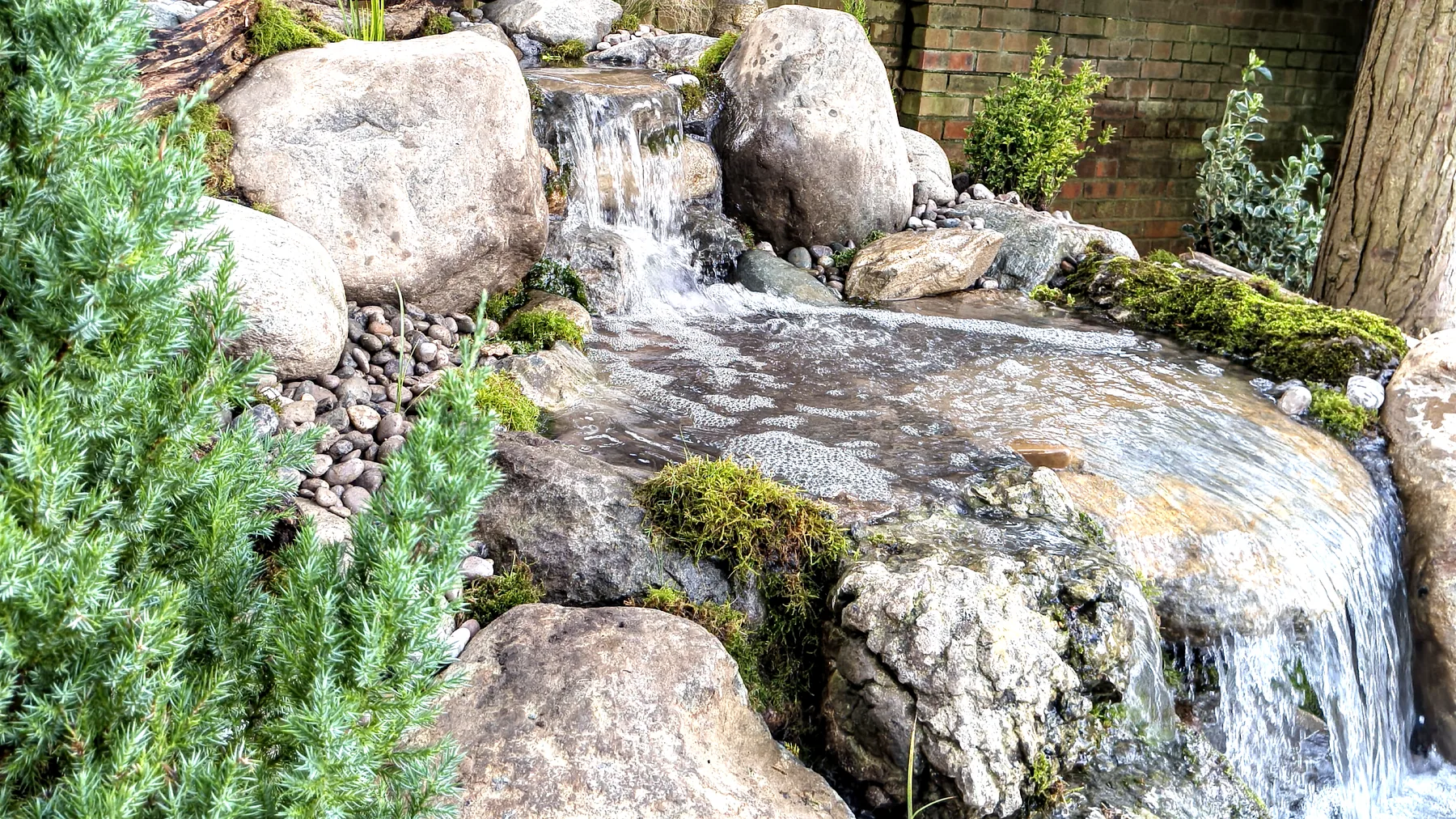
A stone cascade running down beneath a tree beside an old brick wall

Ponds And Water Features For Cambridge Gardens

In the smaller city gardens we are most often asked for wildlife ponds and compact features that bring the sound of water close to the house. A pondless waterfall is a popular choice for families, because it gives you moving water with no open pool. In larger gardens and in the villages there is room for natural ponds with planted margins, streams and falls running into them, and koi ponds built with proper depth and filtration.

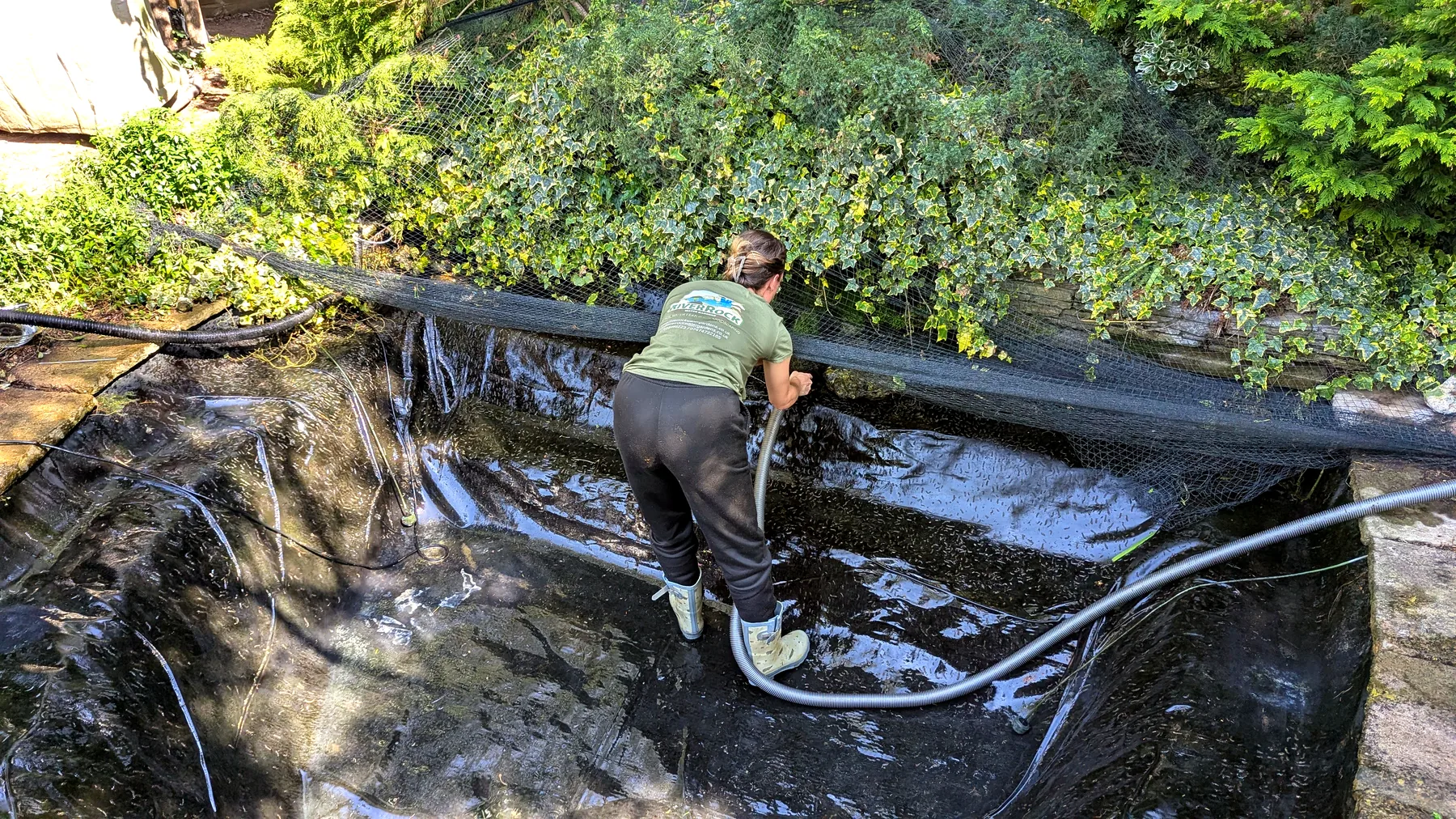
We also bring older ponds back to life. Many established Cambridge gardens have a pond that was dug decades ago and has since started leaking, silted up or disappeared under planting, and most of them can be restored for far less than the cost of starting again.

  • Compact wildlife ponds for terrace and town gardens
  • Self contained water features for courtyards and patios
  • Natural ponds and streams for larger gardens
  • Pondless waterfalls for gardens used by young children
  • Repairs and clean outs for older ponds

Planning, Access And Water In Cambridge

Most garden ponds count as permitted development and need no planning application. That changes in the grounds of a listed building, and in a conservation area a pond to the side of the house should be checked first. Cambridge has many listed buildings and conservation areas, and planning for both the city and South Cambridgeshire is handled by the Greater Cambridge Shared Planning service, so that is where any questions go. We will flag anything we notice at the design stage.

Access is the other thing we plan for carefully. Many terraced houses have no side access at all, so excavated soil and materials have to come and go by hand through the house or along a shared path. We protect floors and doorways, keep the route clear at the end of each day and take the spoil away as we go. Narrow streets and residents parking zones are part of working in the city too, so we agree parking and deliveries with you before we start.

Cambridge tap water is very hard, because it comes from the chalk that lies beneath the area. Topping a pond up from the tap adds minerals and nutrients that can feed algae, so we recommend collecting rainwater where you can. On water features, hard water also leaves limescale behind, and an occasional clean keeps it under control.

Villages And Postcodes

Around Cambridge.

As well as the city itself, from CB1 to CB5, we regularly work in the villages around Cambridge, and on our own doorstep around Willingham.

  • Histon And ImpingtonCB24
  • MiltonCB24
  • GirtonCB3
  • GrantchesterCB3
  • Fen DittonCB5
  • TevershamCB1
  • FulbournCB21
  • Great ShelfordCB22
  • StaplefordCB22
  • SawstonCB22
  • CombertonCB23
  • CotonCB23
  • MadingleyCB23
  • CambourneCB23
  • CottenhamCB24
  • Longstanton And NorthstoweCB24
  • OakingtonCB24
  • Willingham, Over And SwaveseyCB24
  • WaterbeachCB25

Common Questions

Questions From Cambridge.

Yes. We work across the whole city, from Chesterton and Arbury in the north to Trumpington in the south and Cherry Hinton in the south east, and in the villages around it. We are based at Willingham, a short drive north of the city.

Yes. A small garden suits a compact wildlife pond, a formal pool near the house or a self contained water feature. We plan how materials and soil will come and go, which in a terrace with no side access usually means through the house, with floors and doorways protected.

Most garden ponds are permitted development and need no planning application. If your home is listed, if the pond would sit in front of the house, or if it would sit to the side of a house in a conservation area, check with Greater Cambridge Shared Planning first. We will flag anything we notice at the design stage.

It can be used, but Cambridge water is very hard and carries minerals and nutrients that can feed algae. Rainwater from a water butt is better for topping up, and a well planted pond copes with the occasional top up from the tap.

Yes. We position the pond to avoid major roots and the heaviest leaf fall, choose planting that suits partial shade and can fit a net in autumn if leaves are a problem. If a tree is covered by a preservation order, work to it needs the council's consent, and in a conservation area the council must be given six weeks' notice first, so we design around trees rather than cutting into them.

Yes. As well as private gardens, we design and build ponds and water features for businesses, and we can look after them afterwards as part of our grounds maintenance.

Get In Touch

Planning A Pond In Cambridge?

Send a few lines and a photograph if you have one. We will come and look, talk it through on site and send a written quotation afterwards.